By Katie D’Amico, Vice President of Innovation, CareQuest Innovation Partners
The beginning of a new year offers a moment to reflect, refocus, and look ahead. For our work at CareQuest Innovation Partners, that means continuing our mission to make oral health care more accessible, equitable, and integrated — while sharpening our focus on where innovation and impact can most meaningfully advance.
As highlighted in our Oral Health Innovation & Market Map report, oral health sits at the intersection of systemic health, clinical innovation, and a growing consumer wellness market. It represents a distinctive opportunity: one that combines the durability of medical necessity with increasing demand for prevention, personalization, and whole-person care. At the same time, persistent access challenges — including Medicaid cuts, limited Medicare dental coverage, and state-level debates over fluoridation — continue to reshape how and where care is delivered and who ultimately has access to it.
Based on what we’re seeing across startups, employers, payers, DSOs, and health systems, here are five trends likely to shape oral health innovation in 2026.
1.Prevention and longevity will increasingly include oral health
Healthy aging and prevention continue to gain attention across health care and consumer wellness. Up to 60% of consumers rank healthy aging as a top or very important priority, and the global longevity market is projected to reach $8 trillion by 2030, reflecting growing willingness to invest in long-term health and quality of life.
At the same time, the preventive role of oral health remains underrecognized despite strong evidence linking oral and systemic health. Oral health is one of the earliest and most accessible touchpoints for identifying metabolic, cardiovascular, and inflammatory risk — often before individuals present in traditional medical settings. For example, people with diabetes are 86% more likely to have gum disease, and people with gum disease have two to three times the risk of having a heart attack, stroke, or severe cardiovascular event.
In 2026, we expect prevention and longevity strategies to more consistently include oral health — not as an add-on but as a practical, scalable component of whole-person care.
2. Access-first care models will reshape how oral health care is accessed and delivered
Access challenges, workforce constraints, Medicaid rollbacks, and rising consumer expectations are reshaping how people enter and move through the health system. In response, access-first care models — spanning dental, medical, virtual, employer, and other nontraditional settings — are becoming increasingly important to care delivery.
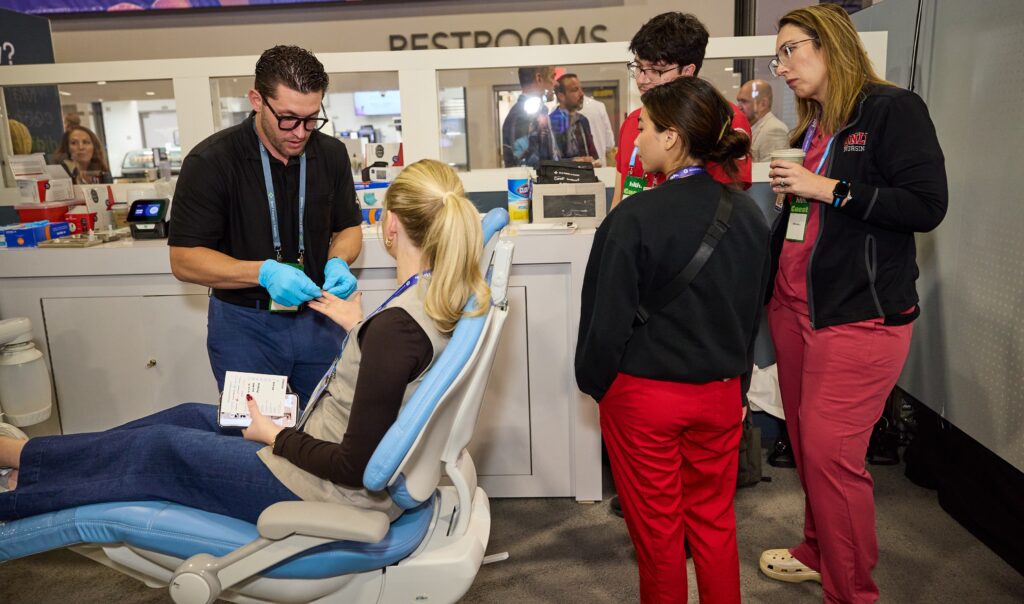
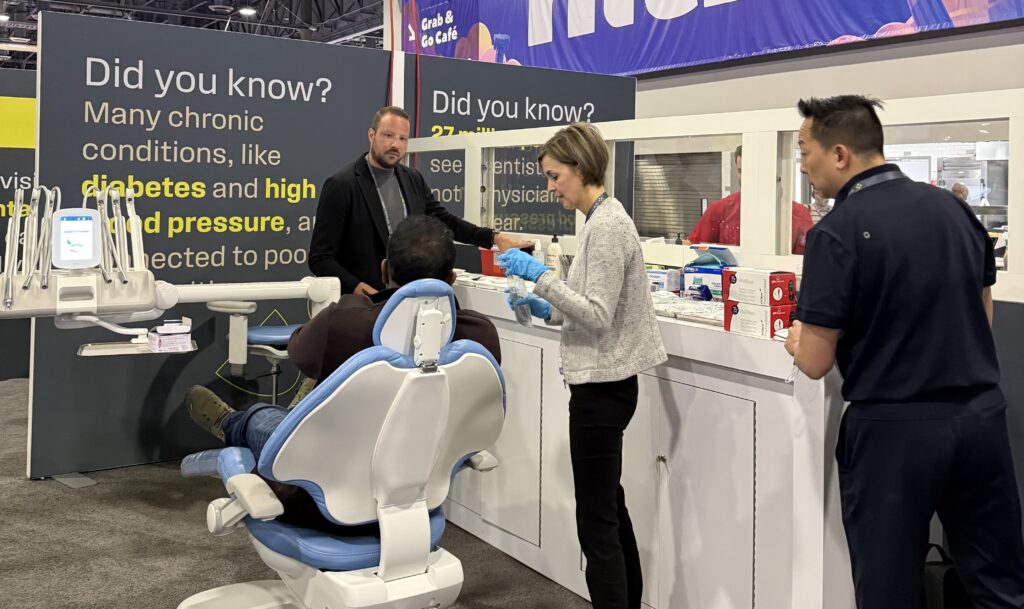
For many individuals, the dental hygiene visit remains one of the most consistent access points to care (e.g., 27M Americans see a dentist but not a physician each year). Increasingly, dental visits support earlier identification of risk through integrated screenings such as A1C, blood pressure, and salivary indicators, without adding new clinical touchpoints.
Oral health is also increasingly accessed through medical settings, with primary care, pediatric, and prenatal visits incorporating oral health risk assessments, fluoride varnish, and referral pathways, particularly for children and Medicaid populations.
At the same time, access constraints are accelerating demand for virtual triage, teledentistry, and hybrid care models, especially as emergency departments (EDs) continue to see high volumes of preventable dental visits. These models help route patients to the appropriate level of care, reduce avoidable ED utilization, and enable faster resolution, including same-day care when appropriate.
Hygiene-forward and subscription approaches are emerging as entry points into care, while of employers now offer on-site or near-site health centers, signaling growing comfort with alternative access points.
Rather than creating new systems, leading approaches focus on meeting people where they already are and improving how care is coordinated. In 2026, access-first models are expected to play a central role in improving access, efficiency, and equity across health care.
3. Women’s health will continue to surface oral health gaps — and opportunities
Women’s health remains an active area of innovation and investment, particularly across pregnancy, maternal health, and menopause. Yet oral health has historically been under-integrated into these care pathways, despite growing evidence linking it to outcomes such as preterm birth, cardiovascular disease, and autoimmune conditions.
As employers and payers expand women’s health offerings, we expect increased attention to oral-systemic connections — especially where inflammation, cardiometabolic risk, and access disparities intersect. This creates an opportunity to design more holistic, prevention-oriented models that better reflect how care is experienced across a woman’s life and support longer, healthier lives.
In 2026, oral health is likely to play a more visible — though still evolving — role within women’s health benefit design and population health initiatives.
4. AI and interoperability will support more practical medical-dental integration
Interest in medical-dental integration is not new, but progress has been constrained by disconnected systems, inconsistent data standards, and limited incentives for care coordination across settings. Advances in AI-enabled automation are beginning to change that — supporting documentation, claims processing, referrals, and real-time data exchange in ways that fit more naturally into clinical operations.
A clear “foundations-first” approach is emerging. Leaders are prioritizing integration into national interoperability frameworks, standardized data flows, and secure, bidirectional exchange between medical and dental settings. These capabilities increasingly support quality reporting, incentive alignment, and participation in national health information networks — moving integration from theory into practice.
These foundations are essential to building provider trust and enabling adoption. When information moves reliably and securely, AI can be applied where it adds the most value — reducing administrative burden, improving coordination, and supporting better clinical decision-making.
In 2026, interoperability and AI are expected to play a growing role in making medical-dental integration less experimental and more operational — focused on tools and infrastructure that providers trust and can realistically adopt at scale.
5. Investment will increasingly favor oral health solutions that enable broader system goals
As capital remains disciplined, investors and strategic partners are prioritizing fewer, more scalable platforms with clear paths to integration, measurable outcomes, and operational efficiency. This reflects a maturing market, where oral health is viewed less as a stand-alone specialty and more as enabling infrastructure for whole-person care.
The stakes are significant: an estimated 1.8 million emergency department visits each year are for preventable dental conditions, costing roughly $3.4 billion and often delivering only temporary relief.
The next wave of investment is expected to focus on solutions that integrate oral health into medical and public health systems, expand access in nontraditional and community-based settings, and demonstrate measurable, scalable impact. Increasingly, capital is flowing toward technologies that enable medical-dental data interoperability, support scalable access models, and reduce operational burden while aligning mission impact with long-term sustainability.
Looking ahead
As prevention, integration, and access increasingly define health care’s future, oral health is well positioned to play a more central role in what comes next. Continued progress will depend on collaboration across technology, care delivery, policy, and investment — and on translating innovation into practical, scalable solutions.
To learn more — and to engage in shaping what comes next — connect with us at CareQuest Innovation.